Home › Stormwater Swale and Rain Garden Hydroseeding
We specialize in swale hydroseeding in Raleigh, NC to stabilize stormwater channels and rain gardens around your home. Our seed mixes are chosen to handle periodic flooding while holding soil in place. Properly vegetated swales reduce erosion, standing water, and yard damage. Schedule a stormwater swale and rain garden hydroseeding evaluation today.
Legendary Hydroseeding Raleigh provides professional swale hydroseeding throughout Raleigh, NC, North Carolina and the surrounding area. Our licensed, insured crew delivers safe, clean, on-time work with a free estimate before anything begins. Call 984-205-9096 or request your free quote.
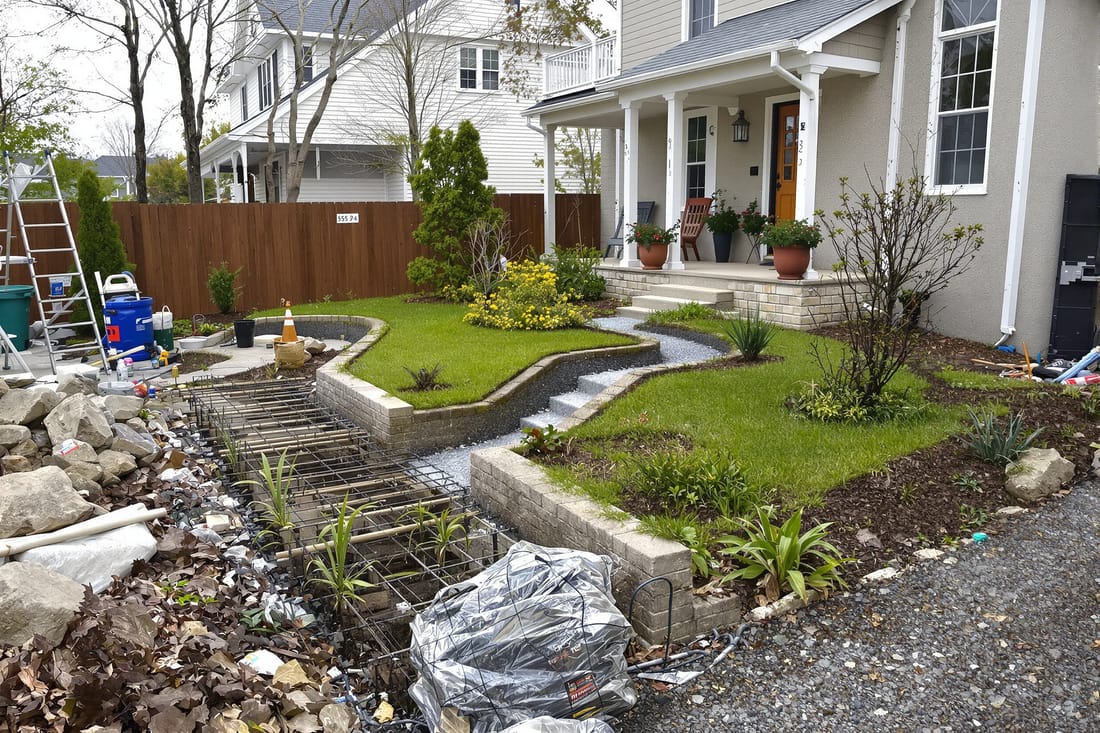
Hydroseeding swales and rain gardens that actually move water in Raleigh
Stormwater swales and rain gardens only do their job if they are built and planted correctly. At Legendary Hydroseeding Raleigh, we focus on how water really moves across Wake County clay soils, not just how the plan looks on paper. Our swale hydroseeding work is aimed at reducing washouts, standing water, and muddy side yards on real Raleigh properties.
Around Raleigh, most lots in subdivisions from the 1980s to today were graded with shallow grass swales between houses and along the backs of lots. Many of these channels are now compacted, patchy, or silted in, so water jumps the banks and heads straight toward foundations, crawlspaces, or driveways. Hydroseeding the swale with the right mix of deep rooted grasses and natives gives you fast cover that holds the soil while the roots develop and the channel shape stabilizes.
Rain gardens are common in newer neighborhoods and in city stormwater retrofit projects. When the basin is excavated and mulched but the planting is thin or poorly chosen, you end up with erosion around inlets and outlets and weeds taking over. Legendary Hydroseeding Raleigh uses spray applied seed mixes that are tailored to wet feet tolerant species, so your rain garden fills in evenly from edge to center, which helps water soak in instead of running through.
How our swale hydroseeding and rain garden process works
Before we ever fire up the hydroseeder, we walk the property. For most Raleigh jobs, that means checking where water actually flows in a heavy rain, looking at high and low spots, downspout locations, driveway edges, and any existing erosion rills. We measure slopes and note soil type, usually a red or orange Piedmont clay with a thin sandy cap in some subdivisions.
If your swale or rain garden is not yet shaped, we can work from your engineer or landscape plan to confirm grades and dimensions. If it already exists but is failing, we identify whether the problem is poor slope, compacted soil, wrong vegetation, or undersized inlets and outlets. In many older Raleigh neighborhoods like North Hills or Five Points, the original grading was never meant for modern roof and driveway runoff, so we often recommend small shape adjustments instead of a full regrade.
Once the layout is set, we prepare the soil. In a swale, that usually means loosening the top 2 to 3 inches, raking smooth, and removing built up sediment that is flattening the bottom. In rain gardens, we check that the basin depth and overflow height match the plan, then lightly scarify the soil surface so seed can key in. For both, we often blend in compost or a topdressing in very tight clay to improve infiltration.
Then we hydroseed. Our tank is loaded with water, a paper or wood fiber mulch, a tackifier to help it stick on slopes, fertilizer suited to your soil test, and a specific seed mix chosen for your conditions. We use fan and straight stream nozzles to reach the whole swale and basin, making sure we get even coverage along side slopes, around rock check dams, and near inlet pipes without clogging them. After spraying, we walk the site again and touch up thin or shadowed spots by hand.
Seed mixes and materials tailored to Raleigh stormwater conditions
What we spray into a roadside swale in Eastern Wake County is not the same as what we put into a shady inner beltline rain garden. Legendary Hydroseeding Raleigh builds seed blends around how wet the area stays, how fast the water moves, and how much maintenance you realistically want to do.
For most functional stormwater swales in subdivisions like Brier Creek, Bedford, or Hedingham, we use a mix of turf type tall fescue for durability, along with deep rooted species such as perennial rye for quick cover and sometimes native sedges and rushes in persistently damp stretches. On steeper side slopes, we may add species with fibrous root systems that knit the bank together and reduce sloughing.
Rain gardens are a different animal. In basins that periodically pond water, we prefer native forbs and grasses that can handle both wet periods and drought, such as certain coneflowers, black eyed Susans, and warm season bunch grasses. We combine those with moisture tolerant sedges placed toward the center. That mix gives you a planted look that also supports infiltration and insect life instead of a plain turf bowl.
Mulch and tackifier choices matter too. On a mild front yard swale with 3 to 1 slopes, a standard wood fiber mulch with a moderate tackifier rate is usually enough. On sharper grades or in areas that see concentrated ditch flows during summer storms, we may increase mulch loading, bump the tackifier rate, or pair hydroseeding with erosion control blankets or coir logs at key bends. These material choices do affect cost, but they are often far cheaper than repairing bank failures or sediment fines later.
Costs, timelines, and what drives your price
Swale hydroseeding and rain garden hydroseeding costs in Raleigh are driven by more than just square footage. When Legendary Hydroseeding Raleigh prices a job, we look at four main factors: site access, slope and complexity, seed and mulch type, and how much soil prep or repair is needed.
Site access has a big impact in tight Raleigh infill lots. If we can park the hydroseeder on the driveway and spray the entire swale or rain garden from one or two hose pulls, costs stay on the lower side. If we have to run long hose lines around houses, work behind townhome rows, or stage material offsite, labor time increases.
Slope and shape come next. A straight 60 foot backyard swale in a typical North Raleigh subdivision is faster and cheaper to spray than a long, winding drainage channel with multiple tie ins behind several properties. Rain gardens with simple rectangular bowls cost less than tiered or kidney shaped basins with rock features and planting shelves because spraying and hand touchup take more time.
Seed, mulch, and reinforcement choices also add or reduce cost. Native heavy blends, high mulch loading, and premium tackifiers cost more per square foot than a basic cool season turf mix. If your stormwater permit or HOA requires specific native percentages or growth performance, we include mixes that meet those requirements and provide documentation.
Finally, existing problems affect price. If your swale banks are already badly eroded, we may need to bring in topsoil, re cut the channel, or install erosion control blankets before hydroseeding. In some older Raleigh neighborhoods with severe gully erosion, stabilizing the site is a bigger part of the budget than the seeding itself. We spell all of this out in a written estimate so you know what you are paying for and where you might have options.
What Raleigh property owners should know before hiring us
Hydroseeding is only part of a successful stormwater fix. Before you hire Legendary Hydroseeding Raleigh or anyone else, it helps to think through a few practical points that often get overlooked.
First, check drainage patterns during a real rain if you can. Take photos or a short video of how water moves through your swale or rain garden area. That on the ground evidence is extremely useful when we design the seed mix, choose reinforcement, and suggest any grading tweaks. It often explains why one neighbor has a soggy yard and the next does not, even when their lots look similar.
Second, understand that hydroseeded areas need a short establishment period. In Raleigh, we typically recommend a focused watering plan for 3 to 4 weeks if rainfall is not consistent. Swales and rain gardens are different from lawns, so we balance moisture for germination with the need for the basin or channel to dry between storms. We will leave you with a simple schedule so you or your landscape crew are not guessing.
Third, be realistic about mowing and maintenance. Many homeowners assume all swales must be closely mowed turf. In reality, slightly taller, mixed vegetation often performs better at slowing and filtering water. If your HOA rules allow it, we can choose a seed mix that is cut a few times a year instead of weekly, which helps infiltration and reduces long term erosion.
Finally, coordinate with any other work like downspout extensions, driveway replacements, or foundation drainage. Hydroseeding a swale or rain garden while upstream gutters still dump directly at your foundation will not solve the bigger issue. We are glad to coordinate sequencing with your contractor or suggest the order that usually gives the best results and avoids tearing up newly seeded areas.