Home › Slope and Bank Erosion Control Hydroseeding
We provide residential erosion control hydroseeding in Raleigh, NC to stabilize slopes, banks, and drainage areas around your home. Our seed and mulch systems protect bare soil from washouts while strong root systems develop. Ideal for hillsides, ditches, and swales, our solutions improve both function and curb appeal. Schedule an erosion control hydroseeding consultation for your property today.
Legendary Hydroseeding Raleigh provides professional residential erosion control hydroseeding throughout Raleigh, NC, North Carolina and the surrounding area. Our licensed, insured crew delivers safe, clean, on-time work with a free estimate before anything begins. Call 984-205-9096 or request your free quote.
Slope & Bank Erosion Control Hydroseeding in Raleigh, NC
Steep slopes and drainage banks around Raleigh neighborhoods can lose soil fast in our heavy thunderstorms. Legendary Hydroseeding Raleigh specializes in residential erosion control hydroseeding that locks soil in place and creates a dense, rooted vegetative cover on hillsides, swales, creek banks, and embankments.
Instead of laying rolls of sod or fighting with loose straw, we spray a slurry of seed, mulch, fertilizer, soil binders, and water directly onto the slope. The mixture forms a protective mat that holds moisture, keeps soil from washing, and helps grass establish quickly. For many Raleigh homeowners, this is the most cost effective and practical way to stabilize a problem slope or bank without building expensive retaining walls.
We design each slope and bank erosion control hydroseeding project around the specific site, not a one size formula. Grade, soil type, shade, runoff patterns, and how you plan to use the area all affect which products, seeding rates, and application methods we choose.
How Residential Erosion Control Hydroseeding Works on Slopes
A successful slope hydroseeding job starts with careful preparation. First we evaluate your property, walk the slope, and look at where water comes from and where it goes during a storm. We check for existing erosion rills, bare spots, compacted areas, and any signs of unstable fill. If necessary, we coordinate light grading to smooth sharp gullies, shape a gentle uniform surface, and create drainage paths that do not dump water straight down a bare bank.
Next we address the soil. On many Raleigh lots, especially new construction, the topsoil was stripped and the slope is mostly red clay subsoil. We scarify or roughen slick clay faces so the hydroseed slurry can key in rather than slide off. In some cases we recommend adding compost or a thin topsoil cap on the upper section of the slope where roots need a better growth zone.
Once the surface is ready, we mix the slurry on site in our agitated hydroseeder tank. For erosion control work on slopes we increase mulch rates, adjust tackifier levels, and boost seed density compared to a flat front yard. Then we spray the mix from the bottom of the slope upward in overlapping passes so there are no thin stripes where water could cut through. On very steep areas that are difficult to reach, we may use additional hose length or multiple spray angles to ensure a consistent, bonded layer.
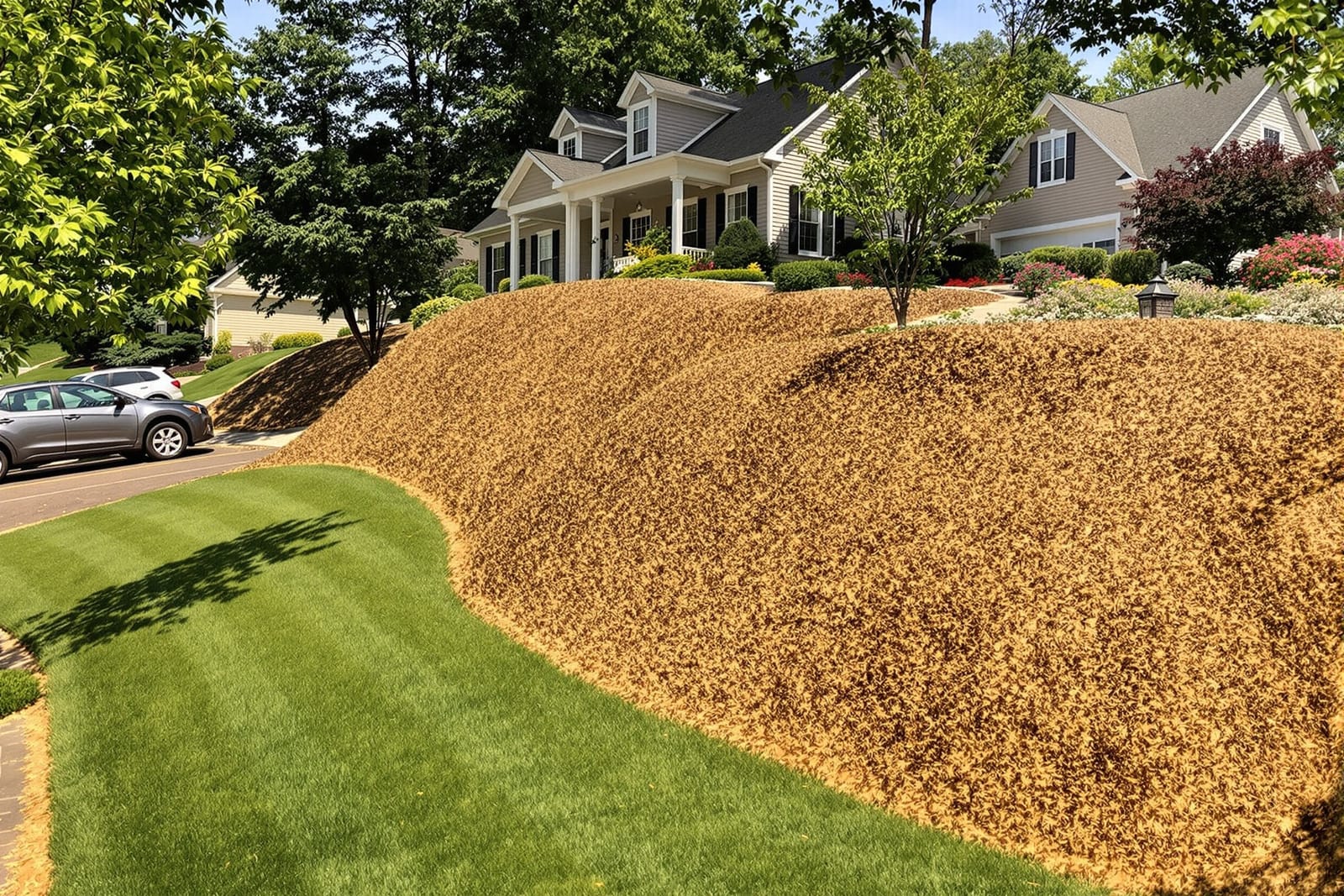
After application, the green or brown mat you see is the mulch and binder holding to the soil. This crust helps reduce raindrop impact and controls sheet erosion while the seed germinates. With proper watering and follow up, roots start knitting the soil together so the slope gradually transitions from relying on the mulch to relying on living vegetation.
Materials and Mix Designs for Steep Banks and Drainage Swales
Legendary Hydroseeding Raleigh does not use a single standard mix for every site. Slopes and banks need a heavier duty approach than flat lawn areas. On critical banks we often recommend a wood fiber or blended wood and paper mulch instead of basic paper mulch, since wood fibers interlock better and cling to steeper faces.
We also adjust tackifier and soil binder levels when slopes get steeper or longer. A mild residential slope may only need a standard tackifier rate, but a sharp roadside embankment or the side of a daylight basement lot may need double or triple that amount so the slurry stays attached through intense thunderstorms. On banks that receive concentrated runoff from roof downspouts or driveway drains, we might combine hydroseeding with fiber rolls, check dams, or surface diversions so the water never gains enough speed to rip through the new cover.
Grass selection is another key difference. In sunny parts of Raleigh, we often use a high quality tall fescue blend with some quick establishing rye to cover bare soil faster, or warm season bermuda where it fits the property. On shady north facing slopes or wooded banks, shade tolerant fescue varieties and groundcovers are important so you are not constantly reseeding thin turf. We can also include erosion control species like annual rye for fast cover the first season while slower, deeper rooted perennials take over for long term stability.
Soil amendments go directly into the tank. Lime to correct acidic clay, starter fertilizer to support early growth, and in some cases organic matter products to improve water holding on drier banks. The exact recipe is matched to what we see on your site and, if available, to your soil test results.
Common Raleigh Erosion Issues and How Hydroseeding Solves Them
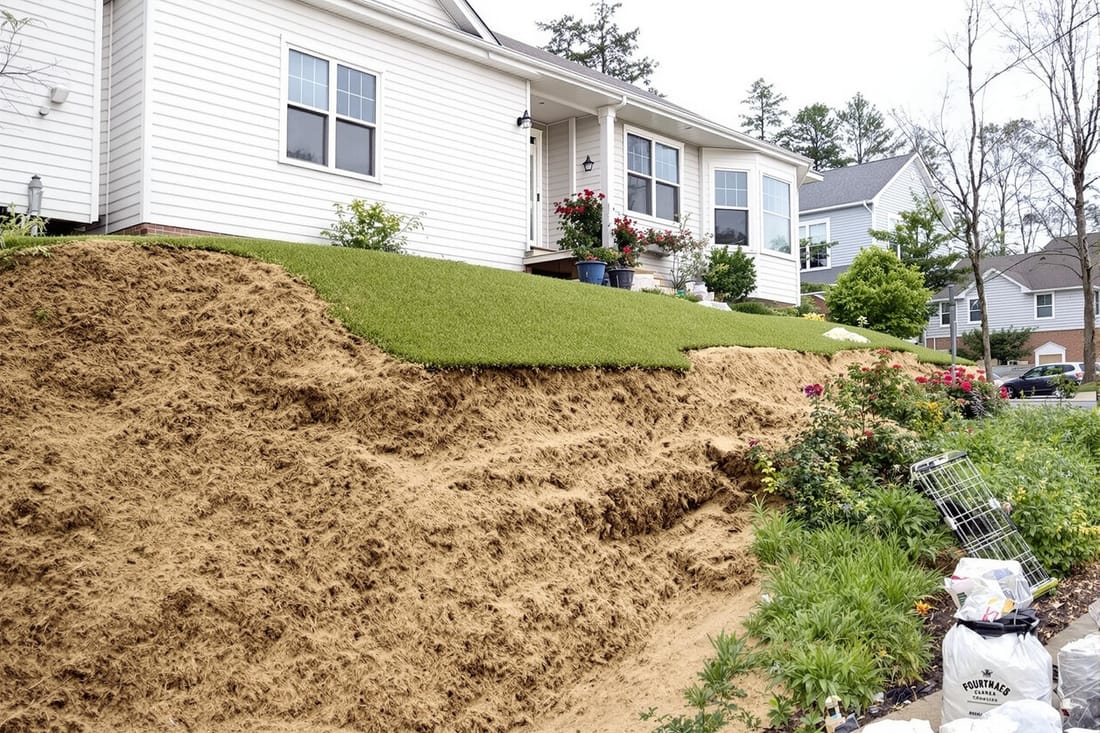
Across Raleigh and Wake County we see similar erosion patterns on residential lots. Walkout basement homes on sloped lots often have a steep transition behind the house where builders cut into the hill. Without immediate stabilization, summer downpours cut ruts into that exposed bank, sending red clay toward patios and lower yards. Our erosion control hydroseeding targets these cut slopes with high mulch rates and deep rooted seed blends so they green up quickly and stop shedding soil.
Another frequent trouble spot is the side yard drainage swale between homes. These channels are meant to carry water, but bare soil turns them into muddy trenches. By hydroseeding with a mix that tolerates periodic flow and wet feet, we convert those swales into vegetated waterways that slow water and keep sediment from washing into the street or storm drains.
Roadside ditches and driveway embankments are also prone to washouts, especially on older neighborhoods where the original grass has thinned. For these we may combine hydroseeding with erosion control blankets or netting in the highest flow zones. The blanket provides mechanical protection, while the hydroseed fills the voids with seed and nutrients. Over time, the roots grow through the blanket and secure the bank, so you do not have to constantly haul in gravel or soil.
In all of these situations, the goal is the same: intercept the energy of falling or flowing water and transfer that energy into dense vegetation rather than moving soil. Hydroseeding is flexible enough to reach awkward slopes and curves, which is a major advantage in tight Raleigh subdivisions with limited access.
What Affects the Cost of Slope and Bank Hydroseeding
Residential erosion control hydroseeding on slopes is priced differently than a simple front yard spray because the work is more involved. The first major factor is slope length and steepness. The steeper and taller the bank, the higher the mulch and tackifier rates required, and the more labor it takes to safely access and spray the entire surface. A low, gentle mound behind a retaining wall is far less demanding than a long, steep cut along a property line.
Access plays a big role in cost. If we can park the hydroseeding rig in your driveway and spray the slope directly, the job is faster and uses less hose. If the slope is behind a fenced yard with tight gates, down a long easement, or blocked by structures, we plan for more hose setup, additional crew, and extra time. These details come out in the site visit, which is why a quick phone quote is rarely accurate for erosion work.
Soil condition and prep needs are another cost driver. A well graded, lightly roughened slope is ready to seed with minimal extra work. A deeply rutted bank with compacted clay and standing water will likely need regrading, decompaction, and possibly drainage changes before hydroseeding is worth doing. We explain these options clearly so you understand what is necessary to get long lasting results instead of spending money on a surface treatment that will fail.
Material choices also influence price. Premium wood fiber mulch, higher seed rates, specialized erosion control species, and stronger binders cost more up front, but they can save you money by reducing the chances of washouts and rework. During our estimate, Legendary Hydroseeding Raleigh will usually present at least two options: a baseline solution that meets erosion control needs and an upgraded package that provides an extra margin of security on critical slopes.
What Raleigh Homeowners Should Know Before Hiring
Before you commit to slope and bank erosion control hydroseeding, it is worth understanding what success looks like and what your role will be. First, even the best hydroseeding job still needs water. On a slope, consistent but gentle irrigation is important so you do not create artificial washouts with sprinkler bursts. If there is no practical way to get water to the slope for the first few weeks, we will discuss seasonal timing or alternative measures.
Second, ask any contractor how they handle heavy rain right after application. Legendary Hydroseeding Raleigh watches the forecast closely. If large storms are imminent, we may adjust binders, reschedule, or add physical protections like straw wattles or temporary diversion berms. We are realistic about what the site can handle, and we prefer to delay a day rather than risk a half finished result.
Third, understand that some slopes benefit from a phased approach. For example, the upper half might be suitable for straightforward hydroseeding, while the lower, wetter section needs blanket plus hydroseed or minor drainage improvements. Be cautious of one price fits all proposals that do not distinguish between problem zones on your property.
Finally, look for a company that works regularly in the Raleigh area and is familiar with local soil behavior, building practices, and storm patterns. Our region gets intense short duration storms that can drop a lot of rain in a single hour, which is very different from a slow, all day drizzle. That difference affects every decision from mulch rate to seed choice to how we direct flow at the base of your slope.
Why Choose Legendary Hydroseeding Raleigh for Slope Stabilization
Legendary Hydroseeding Raleigh focuses heavily on residential erosion control hydroseeding in and around Raleigh, Cary, Apex, and neighboring communities. We understand how local builders grade lots, how red clay behaves when it gets saturated, and which grasses hold up best on slopes through our hot summers and occasional winter freezes.
On every slope and bank project we start with a practical assessment. We point out any grading or drainage concerns that hydroseeding alone will not fix, and we design our mix and application to your specific site, not a cookie cutter template. Our crews use professional agitation hydroseeders so the mulch, seed, and binders are evenly suspended and applied, and they are trained to recognize coverage gaps or thin spots as they spray.
We also provide clear aftercare instructions tailored to sloped areas: watering schedules that avoid runoff, when you can safely walk on the bank, what to expect at 1 week, 1 month, and 3 months, and how to mow early growth without scalping new roots. If a severe storm causes localized washouts soon after application, we can evaluate and propose targeted touch up or reinforcement solutions.
For homeowners dealing with bare cut slopes, eroding creek banks, or muddy drainage swales, our approach is straightforward: stabilize the soil quickly, build a deep rooted vegetative cover, and set clear expectations about what is needed to keep that slope healthy for years to come.