Home › Stormwater Management Facility Hydroseeding
We provide stormwater facility hydroseeding in Raleigh, NC for detention basins, infiltration areas, and conveyance channels. Our seed mixes and mulches are selected to meet BMP requirements while controlling erosion and aiding maintenance. From basin floors to side slopes and access routes, we deliver complete vegetative stabilization. Request hydroseeding support for your stormwater facilities.
Legendary Hydroseeding Raleigh provides professional stormwater facility hydroseeding throughout Raleigh, NC, North Carolina and the surrounding area. Our licensed, insured crew delivers safe, clean, on-time work with a free estimate before anything begins. Call 984-205-9096 or request your free quote.
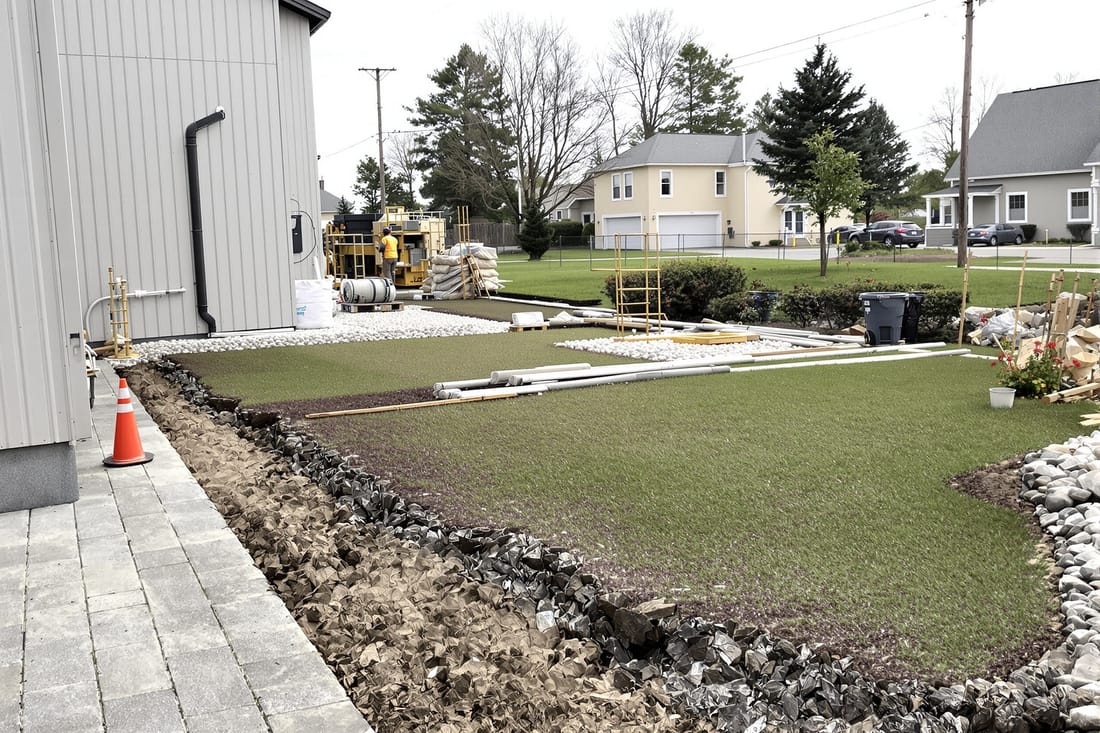
Stormwater facility hydroseeding that stands up to Raleigh weather
Stormwater facilities around Raleigh take a beating from heavy summer thunderstorms, hurricane remnants, and long dry spells. If the slopes around your detention pond, SCM, bioretention cell, or outfall are not stabilized correctly, you end up with rills, gullies, clogged inlets, and notices from the City or NCDEQ. Legendary Hydroseeding Raleigh specializes in stormwater facility hydroseeding that is designed for this exact climate and soil, not a generic roadside mix.
We start by walking the site with you or your engineer. We look at side slopes, basin bottom elevations, inlets and outlets, emergency spillways, and the direction of overland flow. We check compaction, topsoil depth, and whether the facility must meet a specific plan set or NPDES permit condition. This lets us decide where we can use standard turf-type seed mixes and where we need more aggressive erosion control options like high mulch rates, temporary cover crops, or coir blankets.
Stormwater facility hydroseeding is not just spraying green slurry. The equipment lets us deliver a precise blend of seed, fertilizer, soil amendments, and mulch in one even coat over steep, awkward areas that are impossible to reach with traditional seeding. For Raleigh stormwater structures, we focus on building a dense, deep-rooted vegetative cover that survives ponding water, drawdown cycles, and long periods of wet followed by dry. That is the difference between a basin that passes its annual inspection and one that constantly needs repair.
Step by step: how we hydroseed stormwater facilities in Raleigh
Once you approve the scope, Legendary Hydroseeding Raleigh follows a clear process so you know what is happening and why.
1. Site prep and cleanup
We start by removing construction debris, excess rock, and heavy clods. If the contractor has left the soil polished or crusted from machines, we lightly scarify or rake the surface so the slurry can bond. For facilities that have already eroded, we trim back undercut areas, knock down berms that trap water in the wrong place, and regrade washed-out spots so water drains as the design intends.
2. Soil testing and amendment selection
For larger or problem sites, we can pull soil samples and check pH and nutrient levels. Many Piedmont sites around Raleigh have compacted red clay with low organic matter. If pH is low, we blend lime into the hydroseed mix or apply it separately. Where topsoil is thin, we may recommend adding compost, a biostimulant, or humate to help roots establish. We explain which of these are nice-to-have and which are required for compliance so you can stay within budget.
3. Choosing the right seed mix
Some stormwater plans for Raleigh and Wake County specify seed species by name. In that case we match the spec, including pure live seed rates and any seasonal adjustments. If the plans allow contractor choice, we use a practical mix, often turf-type tall fescue for general cover, plus rye for fast germination during cool seasons, and sometimes clover or other stabilizers for added root mass. On frequently wet bottoms or forebays, we may recommend moisture-tolerant grasses and, when allowed, certain natives that handle standing water.
4. Hydroseeding application
We load the tank with water, seed, fertilizers, soil amendments, and wood or blended mulch. For stormwater facility hydroseeding, we typically use higher mulch rates than a standard yard, since these areas see more concentrated runoff. Our crew sprays from accessible edges and, if needed, runs hoses down into the basin to hit every slope and bench. We watch application thickness closely so there are no thin patches that will erode at the first rain.
5. Reinforcement where needed
Steep slopes, spillways, and inlets often need help beyond slurry alone. We can install erosion control blankets, coir mats, or turf reinforcement mats, then hydroseed through or over them according to manufacturer instructions. This gives the seed something to cling to while the roots knit the mat into the soil.
6. Final walkthrough and care instructions
We do a walkthrough with you or send photo documentation so you can include it in inspection records. You get simple, written watering and mowing instructions tailored to the season, plus advice on how to keep sediment and foot traffic from damaging new grass before it is mature.
Material options, cost factors, and how to avoid overruns
Stormwater facility hydroseeding costs more per square foot than a basic lawn because the risk and access challenges are different. At Legendary Hydroseeding Raleigh, we explain your options so you can choose what makes sense for your budget and permit obligations.
Main cost drivers include:
• Access and hose length: Many stormwater basins sit behind buildings or down steep drives. If we need long hose runs, extra labor, or a smaller machine shuttled in, that affects the price.
• Slope and erosion risk: Gentle slopes that are easy to reach can often be treated with a standard mulch rate. Steep embankments, outfalls, and emergency spillways often require heavier mulch, bonded fiber matrix, or blankets, which increases material cost.
• Seed type and spec: Generic cool-season mixes are cheaper. Specified native mixes, wet-tolerant blends, or strict DOT-type specs cost more and may need higher per-acre rates to meet plans.
• Site condition: Hard-baked clay, compacted subgrade, or existing erosion means more prep work. If we have to reshape washed-out areas, import topsoil, or coordinate with your grading contractor, we build that into the estimate.
• Compliance documentation: Some owners ask us to provide seed labels, application rates, and as-applied photos for inspectors or for post-construction stormwater agreements. Gathering and formatting that information takes extra time but can save you trouble at inspection.
To avoid surprises, we recommend you gather the approved plans, any stormwater inspection reports, and photographs of the facility before we quote. We will point out where the plan is overbuilt for your situation and where cutting corners would almost certainly lead to failure or non-compliance. Our goal is not the cheapest line item on your project, but the last time you have to fix the same slope.
We also time the work around realistic weather windows. In Raleigh, hydroseeding for stormwater facilities is most successful in early spring and fall when temperatures and rainfall cooperate. We can seed in summer or winter when schedules demand it, but we will be direct about the added risks and whether temporary irrigation or cover crops are needed to protect your investment.
Common stormwater vegetation problems in Raleigh and how we handle them
Across Wake County and surrounding areas, we see the same stormwater issues over and over: bare spillways, eroded outfalls, clogged low-flow orifices, and basins that will not pass annual inspections because grass never took hold. Legendary Hydroseeding Raleigh approaches each of these with practical fixes.
Erosion on side slopes and embankments usually comes from a combination of poor compaction, lack of mulch, and seeding at the wrong time of year. We correct grades if needed, tighten up compaction without glazing the surface, then apply a heavier mulch rate that can withstand the first flush of runoff. In high-risk locations we pair hydroseeding with an erosion control blanket or a turf reinforcement mat so vegetation has time to establish.
Ponding water that kills grass in basin bottoms or along inlets can be a design issue, but it is often made worse by sediment buildup and construction traffic. Before we hydroseed, we remove excess sediment, clean out around structures, and lightly regrade local depressions that are not supposed to hold permanent pools. Where water is supposed to be present, we choose species that tolerate wet feet rather than fighting the site.
Shade and poor airflow behind buildings are another local problem, especially in tight commercial sites in Raleigh. Tall fescue alone may struggle there. We adjust the mix to include shade-tolerant varieties and advise on selective pruning or trimming to let more light in. If you have an HOA or property manager who needs to keep a certain look, we explain what is realistic so you are not redoing the same area each year.
Maintenance is often the missing piece. New stormwater vegetation should not be mowed too short, driven over by mowers on wet soil, or covered in stockpiled mulch. As part of our stormwater facility hydroseeding work, we provide specific mowing heights and timing, warn you about the risks of weed-and-feed products near inlets, and suggest simple spot repair strategies if a contractor damages a small area.
If a section does fail despite proper care, we will help you diagnose why. Sometimes it is a minor issue like an irrigation head not reaching a corner. Other times it is a larger design or drainage flaw. In either case, we tell you honestly whether a reseed alone will fix it or whether you need your engineer or grading contractor involved again.
Why use a local hydroseeding company for regulated stormwater facilities
Stormwater facilities in and around Raleigh are not just landscaping. They are regulated infrastructure tied to permits, Certificates of Occupancy, and long term maintenance agreements. Using a local contractor who understands those pressures can save you both money and headaches.
Legendary Hydroseeding Raleigh works regularly with developers, general contractors, HOAs, and property managers on SCMs, detention and retention ponds, bioretention cells, and dry ponds. We are familiar with city and county inspection routines, common punch list items related to vegetation, and how inspectors typically interpret plan requirements for ground cover.
Local experience matters because soils, rainfall patterns, and inspection expectations here are different from other regions. We know how Raleigh’s red clay behaves when a tropical system stalls over the Triangle, how quickly bare slopes can cut during back-to-back storms, and how long grass usually takes to establish in different seasons. That history informs our mulch rates, seed choices, and scheduling, instead of using a one-size-fits-all spec from another state.
We also coordinate with local engineers and contractors. If your engineer has a question about species substitutions, seeding windows, or reinforcement options, we can speak the same technical language and respond quickly. If your grading contractor is still finishing punch list earthwork, we align our schedule so fresh slopes are seeded before rains undo their work.
Most importantly, we stand behind our work and are close enough to come back. If an inspector flags a bare area or if a surprise storm damages a section before it has rooted, a local company can assess and respond far faster than an out-of-town crew that may not return promptly. When you hire Legendary Hydroseeding Raleigh for stormwater facility hydroseeding, you get more than a slurry application, you get a partner who understands what it takes for your facility to pass inspections and stay stable over the long term.